Spare Capacity Is an Assumption Until It Is Tested

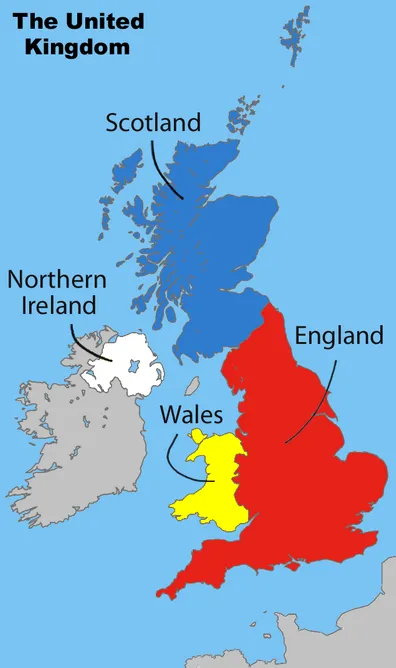
Photo: Rex Needle , CC BY-SA 2.0, via Wikimedia Commons
Service partners are usually selected on capability. Boards and executive teams examine credentials, method, sector experience and price. They may even test a proposal against a defined scope. What they rarely do with the same rigour is test capacity: the partner’s practical ability to carry the work alongside everything else it is already carrying. That distinction matters. Capability describes what a supplier can do in principle. Capacity describes what it can sustain in practice, at the moment the buyer needs it most.
For UK organisations relying on outsourced or professional services, the gap between the two is a governance issue, not merely a procurement one. A partner can be entirely competent and still be unable to respond when a key individual leaves, a major client escalates or a seasonal peak collides with an unrelated commitment. The board’s interest is not in second-guessing operational scheduling. It is in understanding whether the assurance it has received about service continuity rests on evidence or on an assumption.
Capability answers a different question
A capability assessment tends to look backwards and sideways: what the partner has done, for whom, and with what outcome. A capacity assessment looks forwards and inwards: who will actually do the work, what else competes for their time, and what would have to give if demand rose sharply. The first is familiar territory in most supplier reviews. The second is often left to informal assurances.
That is understandable. Capacity is harder to evidence. It sits in timetables, rotas, succession plans and management attention rather than in a polished case study. But difficulty is not a reason to leave it unexamined, particularly where the service supports a regulated activity, a critical customer journey or a statutory obligation. Boards do not need to inspect the partner’s resourcing spreadsheet. They do need to know that someone has asked the right questions and that the answers have been tested.
Key-person load: where the promise actually sits
Many service relationships depend on a small number of people whose knowledge, relationships or technical judgement hold the arrangement together. The buyer may meet them during tender and see them at quarterly reviews. What is less clear is how much of their time is committed elsewhere and what happens when they are unavailable.
A useful board-level question is not simply who leads the account, but where the promise actually sits. If the answer is one individual, the board should ask what succession looks like, how handover is documented and whether deputies have real exposure to the work rather than a name on an organisation chart. It is also worth asking how the partner measures key-person risk internally and whether any mitigation is contractual, procedural or merely cultural.
This is not a demand for named-person guarantees in every contract. It is a request for evidence that the partner understands its own concentration risk. A supplier that cannot describe its key-person dependencies with candour is unlikely to manage them well when circumstances change.
Competing clients and peak commitments
Capacity is also shaped by the rest of the partner’s portfolio. A firm may be well resourced for an average month but stretched during a predictable peak, whether that is year-end reporting, seasonal demand, a regulatory deadline or a sector-specific cycle. The buyer’s work does not exist in isolation from those pressures.
Boards should therefore ask how the partner manages competing commitments across its client base. This need not involve disclosing confidential client names. It can be framed around service tiers, escalation protocols and reserved capacity. Does the partner differentiate between clients when demand spikes, and if so, on what basis? Are there periods when the buyer’s work would be deprioritised, and has that been discussed openly? What early warning would the buyer receive if the partner’s capacity came under strain?
These questions are particularly relevant as UK leadership teams close the 2026 calendar and look towards 2027. Planning assumptions made in November can look fragile in the first quarter if a partner’s peak commitments were never surfaced. A board that understands the partner’s seasonal load is better placed to sequence its own demands and to challenge unrealistic turnaround expectations.
Hidden dependencies beyond the contract
Capacity is not only a matter of people. It can sit in systems, premises, subcontractors, approvals or specialist equipment. A partner may appear well resourced at the front end while relying on a narrow supplier, a single site or an external accreditation that would be difficult to replace at short notice.
Boards should ask for the dependencies that sit beneath the service, not just those named in the contract. Which activities are subcontracted, and how is their capacity assured? Are there single points of failure in technology or logistics? What contingency exists if a critical approval is delayed? The aim is not to replicate the partner’s business continuity planning. It is to establish whether the buyer’s reliance on the partner is matched by the partner’s own resilience.
A candid partner will distinguish between dependencies it controls and those it merely monitors. That distinction is useful assurance. A partner that presents every dependency as fully managed without evidence should invite further scrutiny.
Turning answers into practical assurance
Capacity assurance becomes credible when it is tied to observable triggers. Boards can ask for a simple reporting mechanism: key-person changes, material shifts in the partner’s client portfolio, notified peak periods, and any subcontractor or system dependency that could affect service. These need not be elaborate. A short standing item in quarterly service reviews can be more effective than a one-off capacity questionnaire completed at tender stage and never revisited.
It is also worth agreeing what the buyer would do with the answers. If a key person leaves, what notice and handover should be expected? If a peak period is declared, how will priorities be confirmed? If a dependency is exposed, who owns the remediation plan? The governance value lies in the follow-through, not the data collection.
A question for the next board cycle
The capacity question is ultimately a question about reliance. Boards are entitled to rely on service partners, but they should know what that reliance rests on. Capability alone is an incomplete assurance. The more useful test is whether the partner has the headroom, the depth and the honesty to carry the work when conditions become less comfortable.
As UK organisations review service arrangements in the closing weeks of 2026, that question deserves a place on the agenda. Spare capacity should not be assumed simply because no problem has yet surfaced. It should be tested, evidenced and revisited — before service pressure does the testing on the board’s behalf.